Deep Learning Methods for Object Detection in Drone Images
A master's project exploring YOLO-based deep learning methods for real-time object detection in drone imagery, tested on the COCO and VisDrone datasets.
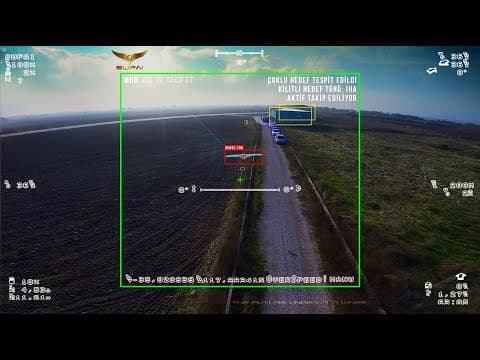
This study is my master's research paper presenting a comprehensive survey of deep learning methods for object detection in drone (UAV) imagery.
Motivation
Drone imagery poses unique challenges — bird's-eye viewing angle, high scale variance, small object sizes, and complex backgrounds. These characteristics make standard object detection methods difficult to apply directly and call for domain-specific solutions.
Method Categories Examined
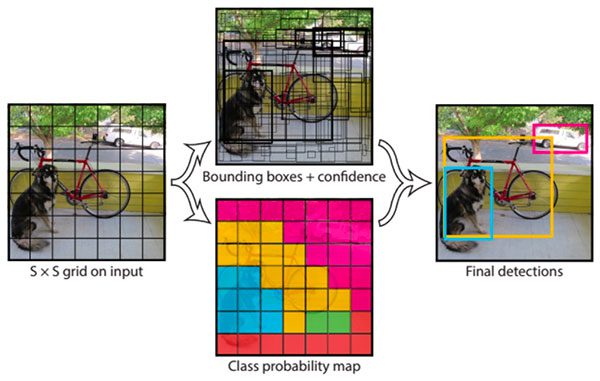
Starting from traditional image processing methods, three main categories were systematically examined:
- Two-stage detectors (Faster R-CNN, Mask R-CNN): propose candidate regions first, then classify them — high accuracy but lower speed.
- One-stage detectors (YOLO series from v3 through YOLO11, SSD, RetinaNet): detect in a single pass, advantageous for real-time applications.
- Transformer-based architectures (DETR, Swin Transformer): capture global context via attention mechanisms, high accuracy but higher computational cost.
Datasets
Comparisons were made using the field's key benchmark datasets:
- VisDrone: 10,209 images, 10 object categories, an average of 52 objects per image — a critical reference for small object detection.
- UAVDT: focused on urban traffic scenarios, 80,000 video frames, ~850,000 bounding boxes.
- Additional datasets including Stanford Drone Dataset, AU-AIR, and DOTA were also included in the evaluation.
Evaluation used precision, recall, F1-Score, and especially mAP@0.5 / mAP@0.5:0.95 metrics, with FPS (frames per second) reported for real-time usability.
Results — VisDrone Dataset
| Method | Category | mAP@0.5 | mAP@0.5:0.95 | FPS |
|---|---|---|---|---|
| Faster R-CNN | Two-Stage | 23.5 | 12.3 | 7 |
| YOLOv4 | One-Stage | 26.3 | 14.2 | 62 |
| YOLOv7 | One-Stage | 30.1 | 16.8 | 83 |
| YOLOv8-m | One-Stage | 32.5 | 18.1 | 90 |
| YOLO11-m | One-Stage | 36.8 | 21.2 | 88 |
| DETR | Transformer | 25.6 | 13.9 | 28 |
| Swin-B | Transformer | 31.7 | 17.6 | 22 |
Results — UAVDT Dataset (Vehicle Detection)
| Method | Category | AP50 | FPS |
|---|---|---|---|
| Faster R-CNN | Two-Stage | 34.7 | 9 |
| YOLOv4 | One-Stage | 42.5 | 65 |
| YOLOv8-m | One-Stage | 52.1 | 92 |
| EfficientDet-D3 | One-Stage | 45.3 | 38 |
| DETR | Transformer | 41.0 | 30 |
Main Findings
- YOLO11 stands out as offering the best balance of accuracy and speed among the methods compared.
- Transformer-based models (especially Swin-B) achieve high accuracy, but computational cost remains a barrier for real-time embedded applications.
- Small object detection remains the most critical open research problem in drone imaging scenarios — Feature Pyramid Networks (FPN) and attention mechanisms are among the most promising approaches.
Real-World Applicability
In an actual drone system, the object detection model must run on an embedded platform with limited compute (e.g. NVIDIA Jetson). Model compression techniques (quantization, pruning, knowledge distillation) play a critical role in closing this gap — compact models like YOLOv8-nano preserve sufficient accuracy while delivering significant speed gains. Domain adaptation capacity — the ability to remain reliable across different climate conditions or urban/rural environment shifts — also remains important for real-world deployment.
Conclusion
The YOLO11 series stands out among methods offering the best speed-accuracy balance for drone applications today. While transformer-based models remain competitive on accuracy, their computational cost is still a barrier for real-time embedded applications. Small object detection remains the field's most critical open research problem.
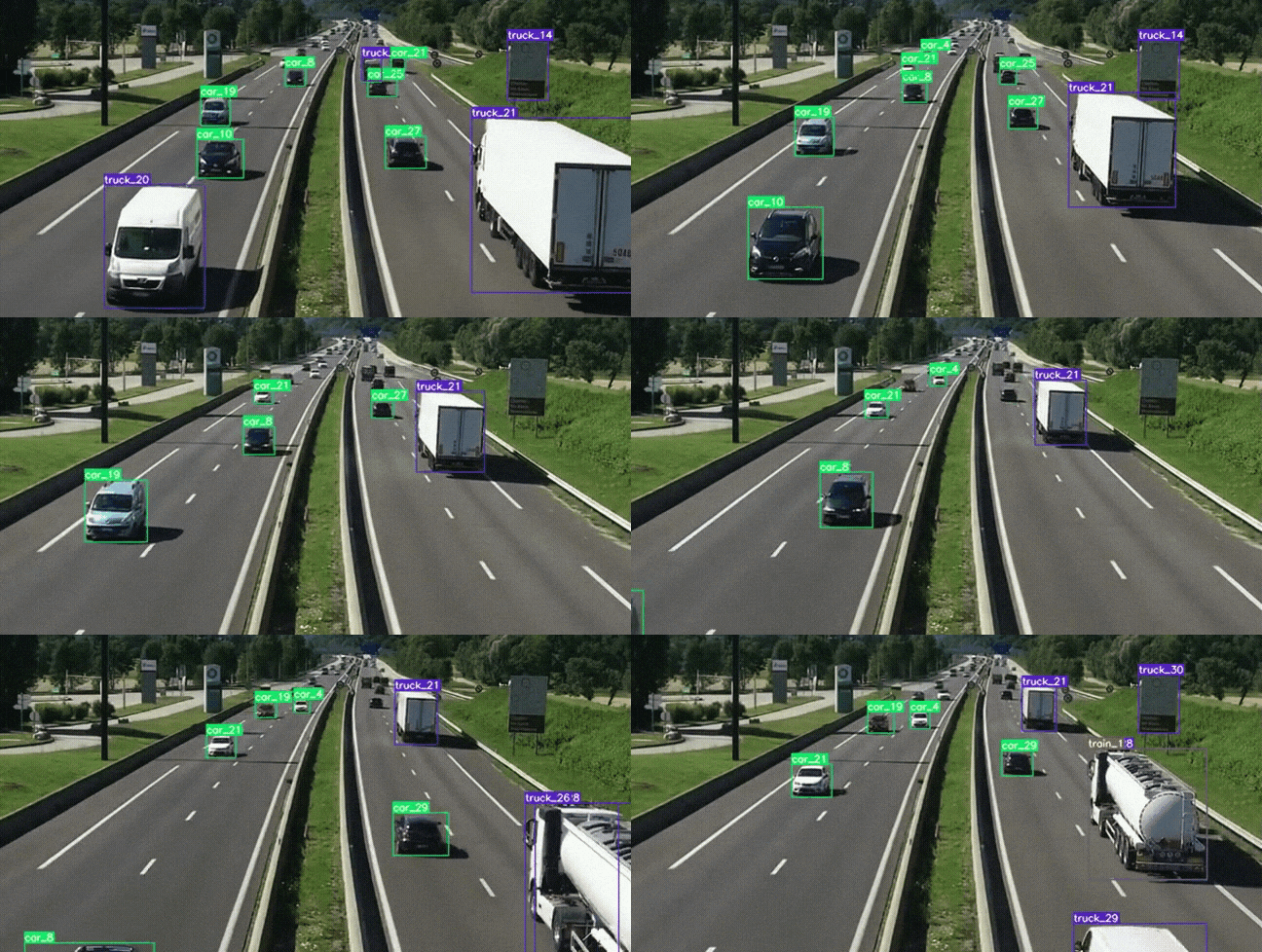
Below you'll find test videos on the COCO and VisDrone datasets, sample images, and the full paper/presentations for this project.